Čeština
  Deutsch
  Español
  Français
  Italiano
  Magyar
  Nederlands
  Polski
  Português
  Slovenčina
  Türkçe
  Русский
  中文
中文  한국의
한국의 KOBOLD Instruments Inc • 1801 Parkway View Drive • 15205 Pittsburgh, PA • Tel: +1 412 788 2830 • E-mail: Please activate JavaScript • visit koboldusa.com

 Magnetic Level Monitoring

Frequently Asked Questions: Magnetic Level Switches
What are Magnetic Level Switches?
Magnetic Level Switches are devices used for monitoring liquid levels in tanks or containers. It operates using a float with an internal magnet that moves up or down with the liquid level. As the float moves, it activates a hermetically sealed reed switch inside the stem, opening or closing the circuit. This simple yet effective mechanism ensures reliable and accurate level detection. These switches are available in various materials to suit different media, including aggressive liquids, making them suitable for a wide range of industrial applications.
What Magnetic Level Switch models are available and how are they different?
Two main models of Magnetic Level Switches are commonly available to accommodate varying tank designs and installation requirements:
1. Magnetic Level Switch – Model M (Top Installation): This model is designed for vertical (top-mounted) installation, where the switch is inserted from the top of a tank or vessel. It operates through a float that moves along a guide tube. Inside this tube is a hermetically sealed contact that is triggered by the magnetic field of the float.
Model M offers a high degree of customization, including:
- Extended guide tube lengths for deep tanks.
- Different types of electrical contacts: normally open (N/O), normally closed (N/C), or changeover.
- Choice of materials for compatibility with various fluids, including aggressive or corrosive ones.
- Adjustable cable lengths and materials.
- Multiple contact points for level indication at various heights.
- Options for electrical enclosures and process connections.
This version is ideal when there’s easy access from the top of the tank and a vertical sensing range is required.
2. Magnetic Level Switch – Model MS (Side Installation): Model MS is tailored for horizontal (side-mounted) installation—a practical solution for tanks where top access is restricted or where side-level detection is preferred. It functions similarly to Model M, using a float with an integrated magnet and a non-contact switching mechanism inside a sealed tube.
Key customization options include:
- Measuring tube lengths specific to installation depth.
- Multiple contact options for flexible level control.
- Compatibility with various media through selection of float and housing materials.
- Electrical terminal options suited for different environments and applications.
This model suits compact setups, retrofit applications, or vessels where mounting on the tank wall is more feasible.
Both models are reliable, low-maintenance, and suited for continuous or point-level monitoring of liquids across industries. They are typically manufactured based on user requirements, ensuring optimal fit and performance.
Need help selecting the right model for your application? Get in touch with our team.
How do Magnetic Float Level Switches work?
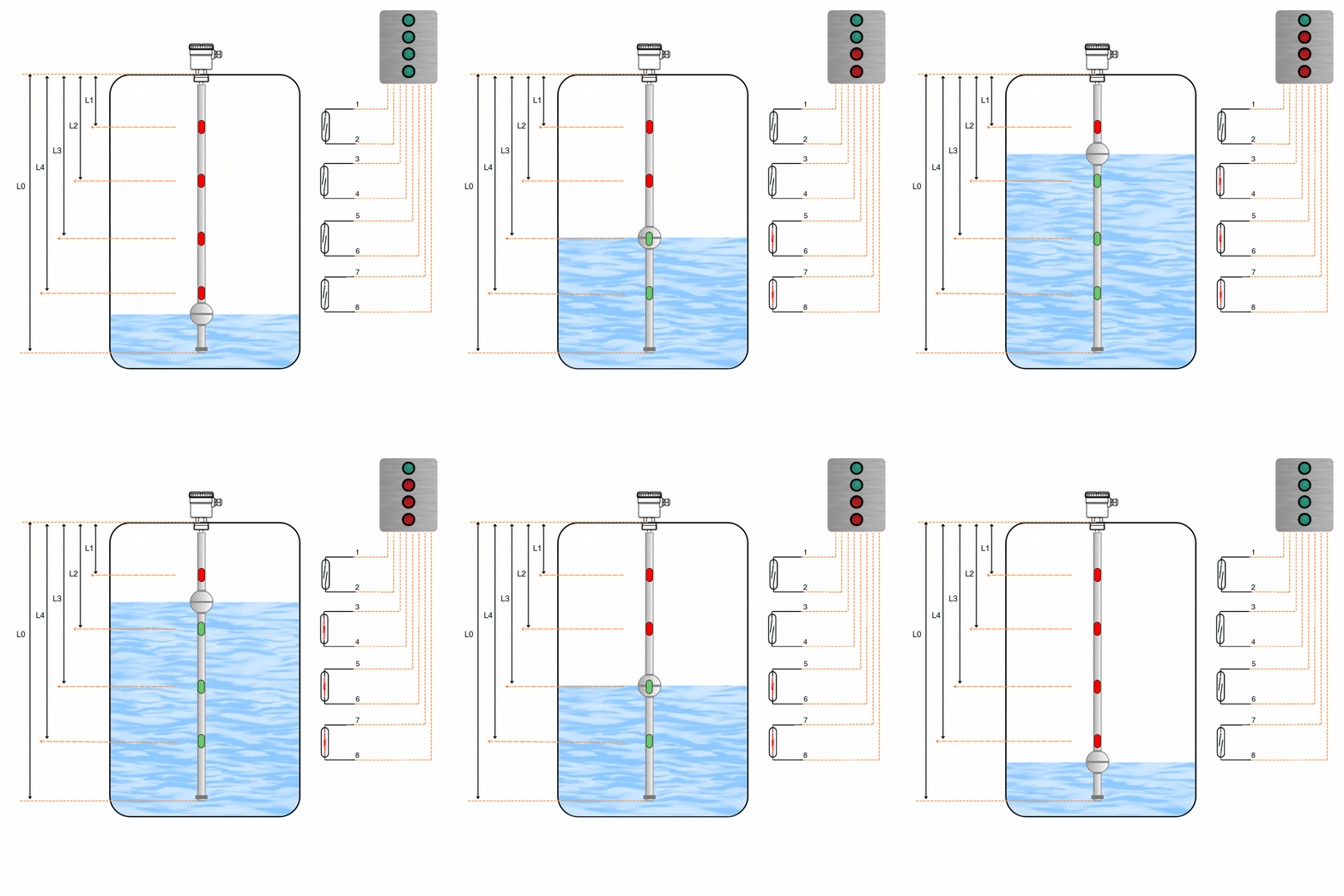
Magnetic float level switches function through a precise interaction between a magnet-equipped float and a sealed switching element enclosed within a protective tube. As the liquid level in a tank or vessel rises or falls, the float moves accordingly along the outside of this tube. Contained within the float is a ring magnet that generates a magnetic field strong enough to actuate the internal switch—without any direct contact.
The switching element, typically a hermetically sealed reed contact, responds to the magnetic field by either opening or closing an electrical circuit. This mechanism allows the switch to detect and signal specific liquid levels. Depending on system requirements, these switches can be configured to operate in different modes: opening a circuit when the level rises (normally closed), closing a circuit (normally open), or toggling between two outputs (changeover or SPDT).
Because the float is the only moving part and the switch remains isolated from the process medium, magnetic float level switches are highly durable, resistant to contamination, and suitable for continuous or point-level monitoring in a wide range of industrial applications.
What are the advantages of using Magnetic Level Switches?
Magnetic Level Switches offer a reliable and efficient solution for liquid level monitoring in industrial and commercial applications. Their design and functionality provide several key advantages:
- Simple Installation: Magnetic level switches are designed for easy mounting—either from the top or side of a vessel—making them quick to install without the need for complex calibration or setup. This reduces installation time and overall costs.
- Long Electrical Service Life: The switching mechanism inside the unit uses hermetically sealed reed contacts, which are protected from environmental exposure, moisture, and corrosion. This design ensures minimal wear and tear, leading to a significantly longer electrical life compared to conventional mechanical switches.
- High Operational Reliability: A major advantage is the non-contact magnetic actuation. The float and the reed switch are separated by a sealed measuring tube, meaning there is no physical contact between the moving part and the electrical components. This air gap protects the internal mechanism and reduces the risk of mechanical failure, improving overall system reliability.
- Multi-Level Monitoring: Some models allow for multiple switching points to be integrated within a single float system. This means that users can monitor and control several predefined levels within a tank using just one device—ideal for applications requiring more complex control without additional equipment.
- Flexible Switching Options: Magnetic level switches are available with different contact types including:
· Normally Open (N/O)
· Normally Closed (N/C)
· Changeover (SPDT)
This flexibility allows integration with various control systems, alarms, or automation setups, making the switches suitable for a wide range of level monitoring tasks.
Where are magnetic level switches typically used, and what conditions should be considered for their application?
Magnetic level switches are widely used for monitoring and controlling liquid levels in various industrial and commercial processes. These devices are best suited for clean liquid media where reliable, contactless switching is required without complex installation or maintenance.
They are commonly applied in areas such as:
- Storage and day tanks
- Process vessels in manufacturing industries
- Water treatment plants
- Cooling and lubrication systems
- Pharmaceutical and food-grade liquid handling systems
To ensure optimal performance, it is important that the liquid medium does not contain suspended solids or particles, and does not have a tendency to crystallize, as such conditions could hinder the free movement of the float and affect switch functionality.
Additionally, users should confirm that the construction materials of the float switch—such as the float, stem, and seals—are chemically resistant to the liquid being monitored. Compatibility prevents mechanical deformation, wear, or damage over time, ensuring long-term reliability and measurement accuracy.
Unsure if a magnetic level switch is right for your application? Talk to our Expert
What maintenance is required for magnetic level switches?
Magnetic level switches are designed for long-term, low-maintenance operation. However, in applications involving liquids that may cause buildup or deposits, periodic maintenance is essential to ensure proper function. In such cases, the measuring tube and the float should be cleaned regularly to remove any accumulated residue or scaling that could restrict float movement or interfere with switch performance. Beyond this occasional cleaning, no additional routine maintenance is typically required, making magnetic level switches a reliable and low-effort solution for continuous liquid level monitoring.
What is the typical pressure, temperature, and liquid density limits for magnetic level switches?
Magnetic level switches are designed to operate reliably within specific physical limits to ensure accurate liquid level monitoring. Generally, these switches can withstand pressures up to 100 bar and temperatures up to 150°C making them suitable for a wide range of industrial applications.
They are compatible with liquids having densities typically ranging from 0.5 g/ml to 0.9 g/ml, which covers many common fluids such as water-based solutions, oils, and various chemicals.
When selecting a magnetic level switch, it is important to verify that the operating conditions of your system — including pressure, temperature, and liquid density — fall within these limits to ensure optimal performance and longevity.
Which industries most commonly require magnetic level switches?
Magnetic level switches are essential components in industries that rely on precise and dependable liquid level monitoring. Due to their simple design, non-contact operation, and compatibility with a wide range of liquids, they are widely used in:
- Chemical and Petrochemical Industries: For monitoring aggressive or hazardous liquids in tanks and vessels.
- Water and Wastewater Treatment: Used in storage tanks, treatment chambers, and pump control systems.
- Food and Beverage Processing: Applied in hygienic environments for controlling liquid ingredients.
- Pharmaceutical and Biotech Industries: Ideal for sterile and contamination-sensitive applications.
- Oil and Gas Sector: Deployed in offshore rigs, refineries, and storage systems for fuel and lubricants.
- Power Generation: Used in cooling systems, boilers, and condensate tanks.
- HVAC and Industrial Cooling Systems: For maintaining fluid levels in chillers and cooling towers.
These switches are favored in industries where durability, minimal maintenance, and safe operation under varying pressure and temperature conditions are crucial. Their adaptability and customization options make them suitable for both standard and complex monitoring tasks.
Can magnetic float level switches be mounted at the bottom of a vessel?
Yes, magnetic float level switches can also be mounted at the bottom of a vessel, depending on the application requirements and installation design. Bottom mounting is useful for certain tank configurations where top or side access is limited.
What are the key features that make magnetic level switches a reliable choice for liquid level monitoring?
Magnetic level switches offer several features that make them a preferred solution across various industries:
- Simple Installation – Designed for easy integration into existing systems with minimal setup time.
- Long Electrical Service Life – Built with durable components that ensure extended operational longevity.
- High Operational Reliability – Offers dependable performance in both standard and demanding environments.
- Flexible Connection Options – Available with a wide variety of mechanical connections and electrical terminal boxes for seamless adaptation.
These features contribute to low maintenance needs, reduced downtime, and consistent performance in diverse applications.
Can magnetic level switches be used with corrosive or aggressive media?
Yes, magnetic float level switches can be manufactured using corrosion-resistant materials such as stainless steel or plastic to suit chemically aggressive liquids. It's important to select materials compatible with the medium to ensure long-term performance.
What installation positions are possible for magnetic level switches?
Magnetic level switches can be installed vertically (top-mounted or bottom-mounted) and horizontally (side-mounted) depending on the tank design and application. This flexibility allows integration into various system configurations.
What certifications or standards do magnetic level switches comply with?
Depending on the manufacturer and model, magnetic level switches may comply with international standards such as ATEX.