Čeština
  Deutsch
  Español
  Français
  Italiano
  Magyar
  Nederlands
  Polski
  Português
  Slovenčina
  Türkçe
  Русский
  中文
中文  한국의
한국의 KOBOLD Instruments Inc • 1801 Parkway View Drive • 15205 Pittsburgh, PA • Tel: +1 412 788 2830 • E-mail: Please activate JavaScript • visit koboldusa.com

 Reed Chain

Frequently Asked Questions (FAQs): Reed Chain Level Sensors
What is a reed chain in level measurement?
A reed chain is a sensing element used in float-based level measurement devices to provide continuous level indication of liquids. It consists of multiple reed switches and resistors arranged vertically on a printed circuit board (PCB), enclosed within a stem.
A magnetic float moves along the stem in response to changes in liquid level. As the float rises or falls, its internal magnet actuates the reed switches sequentially. This switching action alters the total resistance of the circuit, generating a proportional electrical signal corresponding to the liquid level.
This design enables reliable and continuous level measurement with high repeatability. Since the system operates on a simple mechanical principle with only one moving part the float it ensures durability, low maintenance, and suitability for a wide range of liquid monitoring applications.
How does level measurement with reed chain technology work?
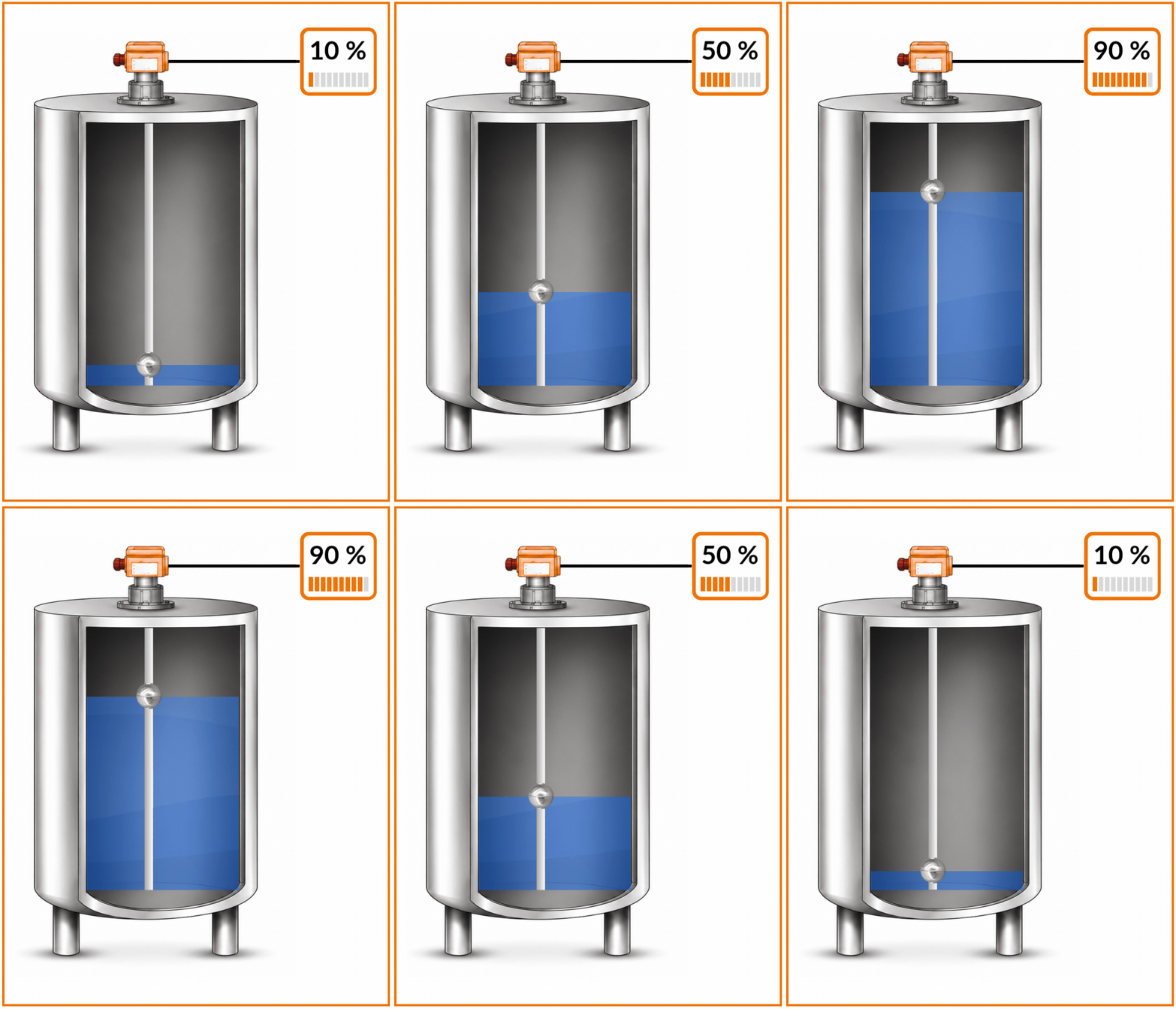
Reed chain level measurement operates on the float principle with magnetic transmission, providing reliable and near-continuous level indication of liquids.
A float containing an embedded magnet moves along a guide tube in response to changes in liquid level. Inside the tube, multiple reed switches and resistors are arranged in a vertical chain. As the float travels, its magnetic field actuates these reed switches sequentially, changing the total resistance of the circuit.
This variation in resistance generates a voltage signal proportional to the liquid level, functioning similarly to a 3-wire potentiometer circuit. Due to the discrete spacing of the reed switches, the output is finely stepped, offering an essentially continuous measurement with typical resolutions ranging from a few millimetres depending on design.
The generated signal can be transmitted directly or converted via an optional transmitter into a standard 4–20 mA output for remote monitoring, control systems, or indication.
In bypass level systems, based on the principle of communicating vessels, the liquid level in the bypass chamber matches the main vessel. A magnetic float within the chamber enables non-contact level indication and transmission to external devices such as magnetic roller indicators, transmitters, or switches, ensuring clear and reliable monitoring even in demanding industrial environments.
Where are reed chain level measurement systems typically used?
Reed chain level measurement systems are applied across various industries for precise and reliable liquid level monitoring:
- Storage tanks: It is Used for continuous level measurement of liquids such as water, chemicals, and fuels, ensuring proper inventory management and preventing overfilling or dry running.
- Mixing vessels: Ideal for processes where accurate level control is required during blending or dosing operations to maintain consistency and product quality.
- Feed and water tanks: It is Commonly used to monitor and control liquid levels in supply systems, ensuring uninterrupted process flow and efficient resource management.
- Wastewater and clarification plants: It is Suitable for monitoring liquid levels in treatment tanks, helping maintain process efficiency in filtration, sedimentation, and purification stages.
- Chemical and manufacturing industries: It is Used for handling a wide range of process liquids, including aggressive or hazardous media, due to their robust and reliable design.
- Power plants and utility systems: Applied in boiler systems, cooling water circuits, and auxiliary tanks where consistent level monitoring is critical for safe and efficient operations.
- Pharmaceutical production facilities: Supports hygienic and controlled processes where accurate level measurement is essential for maintaining strict quality and regulatory standards.
- Food and beverage processing plants: It is Used in applications requiring clean and reliable level measurement, ensuring process consistency and compliance with hygiene requirements.
- Marine applications: Suitable for level monitoring in onboard tanks, where durable and low-maintenance solutions are required to withstand challenging operating conditions.
What are the maximum pressure and temperature limits for level measurement instruments?
The maximum pressure and temperature limits depend on the specific design and application of the instrument. Typically, pressure ratings can range from low-pressure or pressureless conditions up to high-pressure applications (e.g., several hundred bar), while temperature limits may vary from around 60°C to as high as 400°C.
These limits are influenced by factors such as material selection, sealing design, and installation conditions. It is important to note that pressure and temperature ratings vary from model to model, so selecting the appropriate instrument for your operating conditions is essential.
For more information or assistance in choosing the right configuration, please contact our technical expert.
What is the accuracy of a reed chain level sensor?
The accuracy of a reed chain level sensor depends on the spacing of the reed switches and the design of the measuring system. Typically, these sensors provide high-resolution measurements, with accuracies ranging from approximately ±1 mm to ±10 mm, or in some cases percentage-based accuracy over a specific measuring length.
The overall performance can also be influenced by factors such as float design, liquid properties, and installation conditions. It is important to note that accuracy varies from model to model, depending on the configuration and application requirements.
What type of output does a reed chain level sensor provide?
Reed chain level sensors typically provide output signals in the form of analogue signals, such as 4–20 mA, or resistance-based outputs (ohmic signals). These outputs allow easy integration with control systems, PLCs, and display units for continuous level monitoring.
The type of output depends on the signal processing method used, where the reed chain converts float movement into step-wise resistance changes that can be further transmitted as a standardized signal. It is important to note that output options may vary from model to model, depending on the configuration and application requirements. For more information or assistance, please contact our technical expert.
What materials are used in reed chain level sensors?
Reed chain level sensors are available in a range of materials to suit different operating environments and media. Common options include stainless steel for durability and corrosion resistance, as well as engineering plastics such as PVC, PP, PPH, and PTFE for applications involving aggressive chemicals or lightweight requirements.
The selection of material depends on factors such as the type of liquid, temperature, pressure, and installation conditions. It is important to note that material options vary from model to model based on specific application needs.
For more information or assistance in selecting the right material, please contact our technical expert.
What are the key advantages of reed chain level sensors?
Reed chain level sensors offer several practical advantages, making them a reliable choice for liquid level measurement across industries.
- Reliable and Consistent Measurement: Reed chain sensors operate using a simple magnetic principle between the float and internal switches. This ensures stable and repeatable level detection with minimal signal fluctuation, even in continuous operation.
- Simple and Robust Design: The construction is straightforward, with no complex electronics inside the measuring stem. This reduces the chances of failure and makes the sensor easy to install, operate, and troubleshoot.
- Long Service Life: Since the reed switches are sealed and operate without direct mechanical wear, the sensor experiences very low internal stress. This results in a longer operational life compared to many other sensing technologies.
- Low Maintenance Requirement: With fewer moving parts and a non-contact switching mechanism inside the stem, maintenance needs are minimal. This helps reduce downtime and overall operating costs.
- Wide Application Compatibility: These sensors can be used in a variety of liquid applications, including water, oils, chemicals, and other industrial fluids. Different material options make them adaptable to both standard and aggressive media.
- Flexible Output Options: Reed chain sensors can provide resistance-based or analogue outputs (such as 4–20 mA), allowing easy integration with control systems, PLCs, and monitoring devices.
- Customizable Configurations: They can be manufactured in different lengths, materials, and mounting styles to suit specific tank sizes and application requirements.
What types of liquids can be measured using reed chain level sensors?
Reed chain level sensors are suitable for measuring a wide range of liquids, including water, oils, chemicals, and various process fluids. They can also be used with viscous liquids, provided the float design and operating conditions are appropriate.
The key consideration is ensuring compatibility between the liquid and the sensor materials, especially in applications involving aggressive or corrosive media. It is important to note that suitability may vary from model to model depending on the design and application requirements.
Is calibration required for reed chain level sensors?
Reed chain level sensors are typically factory-calibrated and ready for installation, making them largely plug-and-play devices. Due to their simple and stable operating principle, they generally do not require regular calibration or external setup during operation.
However, in certain critical applications or specific process conditions, periodic checks may be recommended to ensure continued accuracy and performance. It is important to note that requirements may vary from model to model and application to application.
Do reed chain level sensors require regular maintenance?
Reed chain level sensors generally require minimal maintenance due to their simple and reliable operating principle. They are designed for long-term operation with limited-service needs.
However, periodic inspection is recommended to ensure optimal performance, especially in applications where the liquid may cause deposits, scaling, or contamination. In such cases, the float and measuring tube should be cleaned at regular intervals to prevent buildup.
For installations in dirty or particle-containing liquids, occasional cleaning of the system may be necessary to remove settled particles. The indicator and other components typically do not require additional maintenance under normal operating conditions.
It is important to note that maintenance requirements may vary from model to model and application conditions.
Can reed chain level sensors be used in harsh environments?
Yes, reed chain level sensors can be used in harsh industrial environments, provided they are selected with appropriate materials and design. They are often constructed using durable materials that can withstand corrosive media, high temperatures, and demanding process conditions. For hazardous areas, these sensors can also be supplied with ATEX-certified versions, ensuring safe operation in environments where explosive gases or dust may be present.
It is important to note that suitability and certifications vary from model to model, so it is essential to confirm the specific requirements before selection.For more information or assistance, please contact our technical expert.