Čeština
  Deutsch
  Español
  Français
  Italiano
  Magyar
  Nederlands
  Polski
  Português
  Slovenčina
  Türkçe
  Русский
  中文
中文  한국의
한국의 KOBOLD Instruments Inc • 1801 Parkway View Drive • 15205 Pittsburgh, PA • Tel: +1 412 788 2830 • E-mail: Please activate JavaScript • visit koboldusa.com

 Temperature Monitoring, Bi-Metal

Frequently Asked Questions: Bi-Metal switch
What is a bimetal temperature switch?
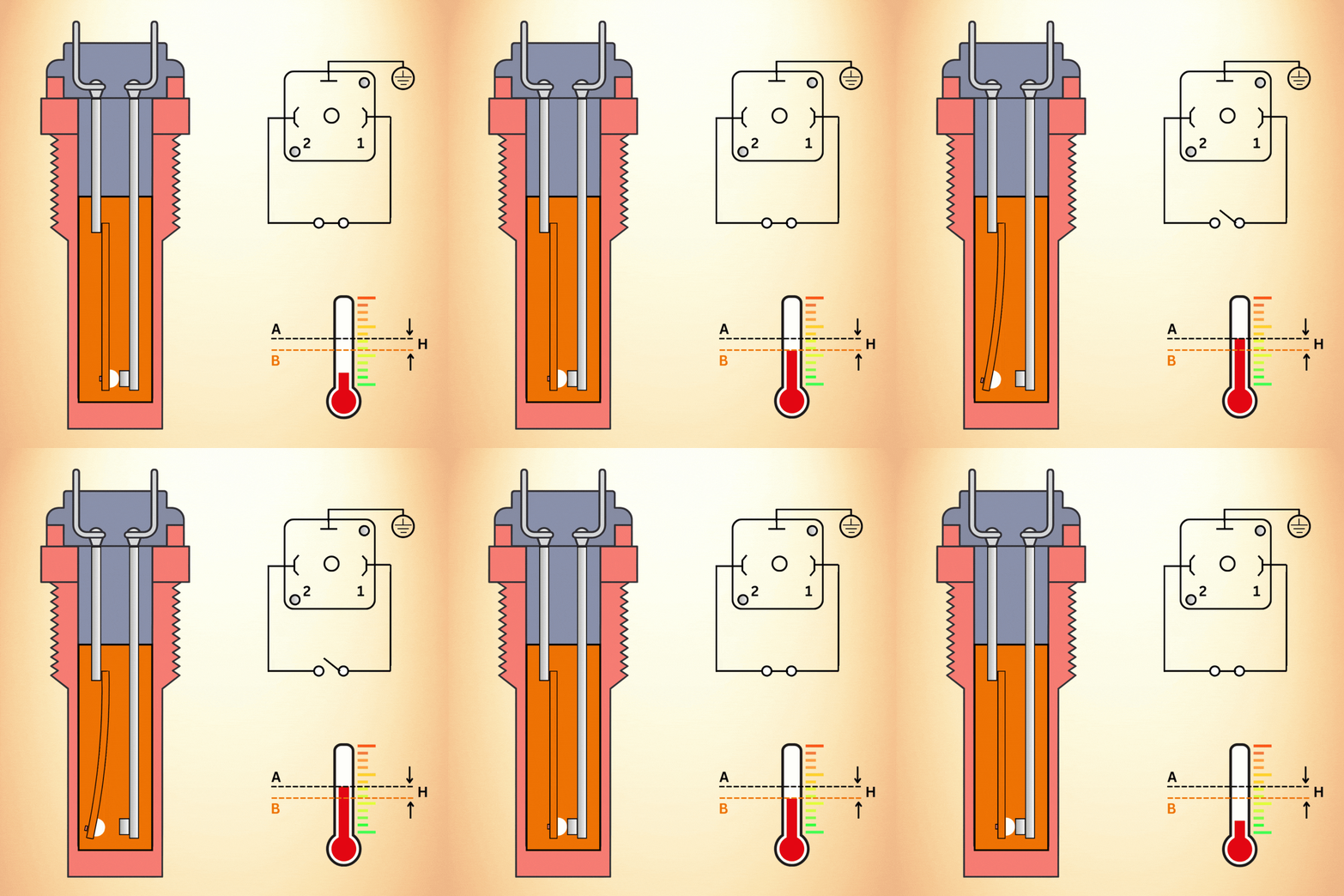
A Bimetal temperature switch is a mechanical thermal switch based on the principle of thermal expansion between two bonded metals with different thermal expansion coefficients. These metals form a bimetallic strip that expands and bends with temperature changes. When a set temperature is reached, the bending creates a connection that opens or closes like an electrical switch contact. The temperature switch is also used, for example, for temperature monitoring for switching devices on and off, or as a temperature controller that controls the switching on and off of cooling systems as a two-point controller.
These switches are often used in industrial applications to monitor or limit temperatures, thus helping to protect machinery and equipment. The bimetal temperature switch can also shut down a machine in the event of overheating or activate a fan when a certain temperature is exceeded.
Main features:
- Mechanical operation: Works without external energy (no auxiliary power required).
- Direct process connection: Can be quickly and reliably screwed directly into pipes or vessel walls.
- Easy installation: Typically, compact and easy to install .
How does a bimetal temperature switch work and install it?
A bimetallic temperature switch operates with a bimetallic strip consisting of two interconnected metals with different thermal expansion rates. When temperatures change, the strip bends due to the different expansion rates of the metals. When a predefined switching temperature is reached, this bending activates an electrical contact – depending on the design (normally closed or normally open), it opens or closes the circuit.
The switching function is mechanical and self-contained, meaning it requires no external power supply. It serves as a simple and reliable solution for temperature control and safety monitoring.
Installation is typically achieved by screwing the switch into a threaded bushing (usually G¾) that is welded to the pipe or tank. Other thread sizes are also available depending on application requirements.
Important NOTE: These switches are only for use with Liquids, namely those liquids that are chemically compatible with the materials of the Thermostat Junction box in Brass or stainless steel are compatible. This should be ensured. The use of incompatible media may lead to corrosion or sensor failure.
Bimetallic temperature switches are widely used for monitoring, overheat protection and automatic control in industrial fluid systems due to their durability, simplicity and independence from external power sources.
What materials are used in the construction of bimetal temperature switches?
Bimetal temperature switches are typically made from durable materials such as brass or stainless steel, are suitable for industrial environments, and are corrosion-resistant to many media.
What are the switching temperature ranges for bimetal temperature switches?
TWS bimetal temperature switches are available with fixed switching points across a wide temperature range. These switching points are factory presets and cannot be adjusted by the user. The switching temperature ranges are typically offered in the following defined intervals:
● From -15°C to + 160°C: Available in 5°C
In some configurations, the switching points are provided in:
● 5°C intervals from -15°C to +160°C
Most temperature switches in this category are designed as normally closed (N/C) contacts, i.e. the circuit is closed under normal conditions and opens when the preset temperature is exceeded.
This fixed-step temperature configuration ensures reliable, repeatable switching for industrial temperature control and safety applications.
How is the electrical connection made for bimetal temperature switches?
The electrical connection is usually made via a connector. Some models are available with a connecting cable. A connector is optionally available with an integrated indicator light, allowing the switching status to be displayed.
What are the typical model variants of bimetal switches?
- Robust industrial design: This model is designed for robust performance in demanding industrial environments. It offers high mechanical strength and reliability, making it suitable for outdoor installations, processing plants, and areas with high mechanical stress or vibration. For full specifications and configuration options, Click here to view the detailed product page.
- Compact and economical: The TWS model is a space-saving solution for installations with limited space. It delivers precise temperature measurements in a compact form factor, making it ideal for smaller systems, pipes, or devices where standard-sized devices cannot be accommodated. For more information on features, specifications, and installation options, visit Click here to view the product page.
- Back flange or plate Mounting: TBS is specifically designed for applications requiring rear flange or panel integration. It's perfect for control panels, display systems, or any other system where a clear front view and stable mounting are essential. Learn more Click here to view the detailed product page .
What are the main features of bimetal temperature switches?
Bimetallic temperature switches are mechanical devices for reliable and efficient temperature monitoring and control in various industrial applications. Key features include.
- Mechanical operation: It Works without external power supply – no auxiliary power required.
- Fixed switching points: Available in 5°C intervals for consistent and accurate switching.
- Wide temperature range: Suitable for applications from -15 °C to +160 °C.
- Normally closed contact (N/C): Most variants remain closed under normal conditions and open when the preset temperature is exceeded.
- High switching capacity: Supports electrical switching loads of up to 16 A.
- Easy installation: Equipped with a threaded unit for easy and secure installation.
- Regardless of the installation position: It can be installed in any orientation without affecting performance.
- Direct process connection: Screwed directly into pipes or containers for direct temperature measurement.
- Compact and durable design: Available in brass or stainless steel, ideal for harsh industrial environments.
- No calibration required: Factory preset for easy setup.
- Overheating protection: Helps prevent system damage by initiating shutdowns or activating cooling mechanisms.
- Maintenance-free: Long service life with minimal maintenance requirements.
Do you need help selecting the right bimetal switch for your application? Contact our technical experts today
What applications are bimetal temperature switches used for?
Bimetallic temperature switches are used in a wide variety of applications where reliable temperature monitoring or control is required. Designed for liquid media, they are ideal for direct installation in pipelines, tanks, or vessels and are commonly used for the following purposes::
- Overheating protection: Automatically shuts down machines or devices when the temperature exceeds safe limits.
- Fan or cooling system control: Activates fans or cooling units when the temperature reaches a defined threshold.
- Pipeline and vessel monitoring: Monitors the temperature in liquid-carrying pipes and storage tanks.
- HVAC systems: Used in heating, ventilation and air conditioning systems to regulate temperature.
- Motors and transformers: Provides thermal protection to prevent overheating and damage.
- Industrial machinery: Ensures safe operating temperatures in processing and production facilities.
- Power distribution boards: Monitors temperature to prevent electrical component failure due to excessive heat.
- Renewable energy systems: Used in wind turbines, solar inverters or battery systems to maintain safe temperature ranges.
In addition, some bimetal temperature switches are universal, meaning they can be used in both liquid and air systems wherever temperature control is required.
Still not sure which type is best for your application? Contact our technical expert.
What are the advantages of using bimetal temperature switches?
Bimetallic temperature switches offer a reliable and efficient solution for temperature monitoring and control in various industrial and commercial applications. Their mechanical design and self-actuating operation offer numerous advantages::
- Durability and reliability: It is designed for operation in harsh environments with minimal wear and long service life without frequent maintenance.
- Cost-effective: Compared to complex electronic temperature control systems, they are cheaper and therefore a budget-friendly choice.
- Simple design: The operation is based on the expansion of two joined metals, resulting in a simple and proven mechanical design.
- No external power supply required: Works without batteries or power supply, ideal for remote or energy-sensitive locations.
- Excellent repeatability: Ensures consistent switching at the preset temperature point, ensuring stable performance over an extended period of time.
- Wide temperature range: They are suitable for operation over a wide temperature range and are therefore versatile for different media and processes.
- Easy installation and operation: Quick to install and easy to use, with minimal setup or training required.
- Resistant to harsh conditions: Designed to withstand vibration, dust, moisture and other environmental influences.
These advantages make bimetallic switches the preferred choice for temperature-critical systems in industries such as manufacturing, power generation, fluid handling, and heating, ventilation and air conditioning.
What switch configurations are available for bimetal temperature switches?
Bimetallic temperature switches are typically available with fixed switching points. These switching points are typically offered in increments of 5 °C or 10 °C across a defined temperature range. Depending on application requirements, users can choose between normally closed (NC) and normally open (NO) contact configurations.
What materials are commonly used in the construction of bimetallic temperature switches?
The housing of bimetal temperature switches is typically made of brass or stainless steel, providing corrosion resistance and durability under harsh operating conditions. This makes them suitable for a wide range of industrial applications, including those exposed to moisture, vibration, or extreme temperatures
What should be considered when installing a bimetal temperature switch?
Before installing a bimetallic temperature switch, ensure that the preset switching temperature and contact type (normally closed or normally open) meet your system's requirements. This information can usually be found on the device's nameplate. During installation, the switch should be secured with a suitable threaded connection, typically sealed with threaded tape or a flat gasket to ensure a tight connection. The sensor tip must be fully submerged in the fluid to ensure accurate temperature sensing and efficient heat transfer.
Ensure that the maximum permissible operating pressure of the switch is not exceeded. Avoid installation in areas where solid or contaminated media may cause deposits, as this may cause thermal insulation and reduce accuracy.
After installation, it is recommended to check the tightness of the connection to avoid leaks or pressure losses. The inlet and outlet flow directions are generally not critical for proper operation.
Are there electrical connection options for bimetal temperature switches?
Yes, bimetal temperature switches are available with various electrical connection types. Connectors are standard, but some models offer additional features such as integrated indicator lights, PT100/PT1000 sensors, or a second switching output for extended functionality.
How accurate are bimetal temperature switches?
TWS bimetal temperature switches typically offer the following accuracy ranges:
- Up to 130°C: ± 5°C
- From 130°C to ± 160°C: ± 10°C
These accuracy values are standard for mechanical bimetallic switches and are suitable for general temperature monitoring where high precision is not critical. For applications requiring tighter tolerances, alternative sensor technologies may be recommended.
What maintenance is required for bimetal temperature switches?
Bimetal temperature switches are generally maintenance-free when used with clean media. However, if the medium contains contaminants or deposits form, this can lead to inaccurate readings or malfunctions. In such cases, it is recommended to check and clean the switch at regular intervals, depending on the degree of contamination in the process environment.
Are bimetal temperature switches suitable for use in potentially explosive atmospheres?
Yes, some bimetallic temperature switches are suitable for use in potentially explosive atmospheres and can be supplied with ATEX certification for operation in potentially explosive atmospheres. However, it is important to note that not all models are ATEX certified, and models without this certification are not suitable for use in potentially explosive atmospheres.
When selecting a switch for environments containing flammable gases, vapors, or dust, always ensure that the model has the appropriate ATEX rating. Using a non-certified device in such areas can pose serious safety risks and violate compliance regulations.
To ensure a safe and compliant installation, confirm the certification status before deployment. Contact our technical team to help you select the right certified version for your application.