Čeština
  Deutsch
  Español
  Français
  Italiano
  Magyar
  Nederlands
  Polski
  Português
  Slovenčina
  Türkçe
  Русский
  中文
中文  한국의
한국의 KOBOLD Instruments Inc • 1801 Parkway View Drive • 15205 Pittsburgh, PA • Tel: +1 412 788 2830 • E-mail: Please activate JavaScript • visit koboldusa.com

 Membrane Level Monitoring

Frequently Asked Questions (FAQs) – Membrane Level Monitor
What is a membrane level monitor?
Membrane level monitor is an economical and reliable solution for level monitoring of dry bulk goods in storage vessels such as silos and bins. They are commonly used to indicate full and empty conditions and to signal load demand for dusty, powdery, granular, and grainy materials. These devices are suitable for bulk materials with densities ranging from 0.3 to 2.5 t/m³ and particle sizes of up to 30 mm, provided the material is free-flowing and flows at a sufficient angle to exert pressure on the sensor.
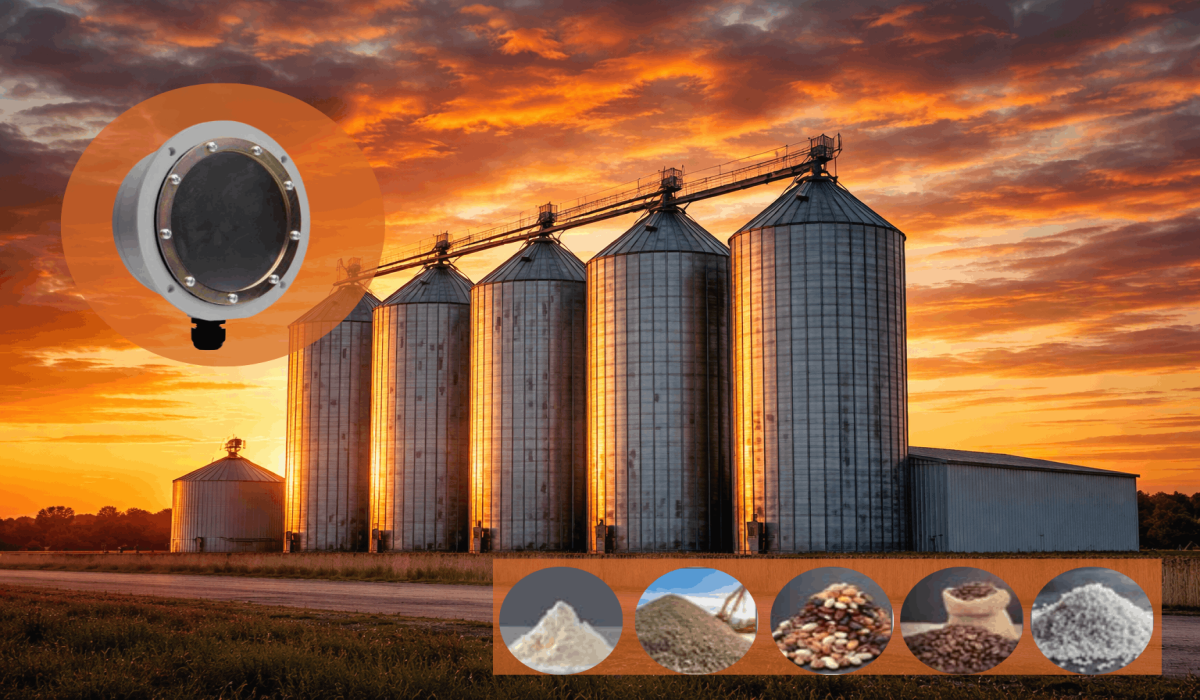
The operating principle is based on a pressure-sensitive membrane, typically made of elastomer or thin metal, which is mounted on the wall of the silo. When bulk material presses against the membrane, the pressure is transmitted to an internal mechanical switch, triggering a level signal. Reliable operation depends on the material flowing easily and exerting adequate pressure on the detector. The device performs best when the bulk material is not sharp-edged and when the sensor is not installed directly in the material filling stream. In challenging conditions, simple mechanical shielding can be used to protect the membrane and ensure consistent performance.
This is suitable for a wide range of dry, free-flowing bulk media, including alum, bauxite, ceramics, dolomite, gravel, sand, slag, clay, sugar, and insulation materials, as well as agricultural and food products such as wheat, rice, corn, oats, coffee beans, peas, peanuts, almonds, hazelnuts, fish meal, and other grains and granular materials
How does a membrane level monitor work?
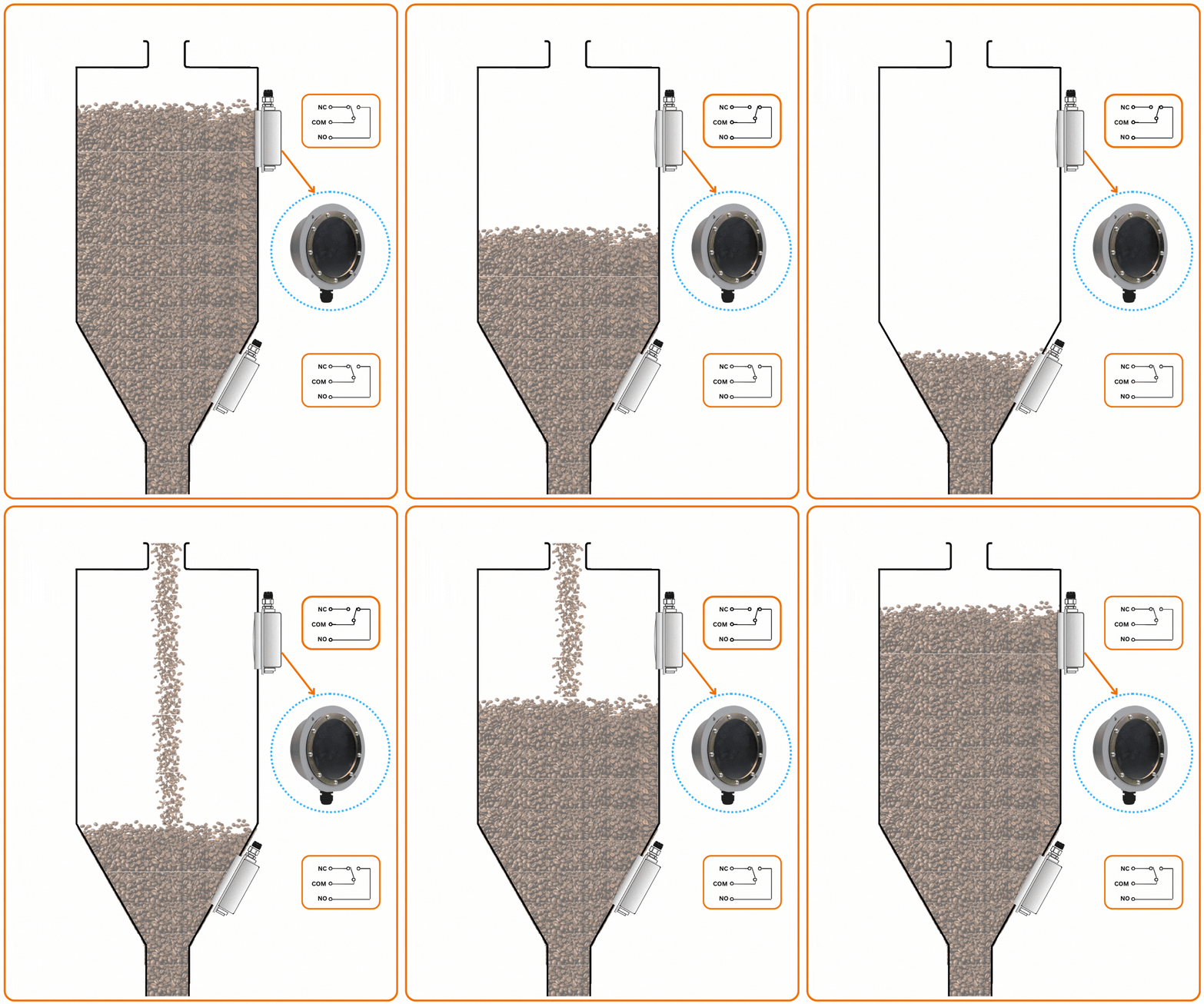
A membrane level monitor operates on a simple and reliable pressure-based principle. When bulk material reaches the sensor, its weight presses against a flexible membrane mounted on the housing. This membrane, which is pre-stressed by an internal spring, moves inward under pressure and transfers the force via a plunger to an internal microswitch with a changeover contact, activating a level signal. When the material level falls and the pressure is released, the membrane returns to its original position and the switch resets automatically. The sensitivity of the device can be adjusted using the spring, allowing the monitor to be optimised for different bulk materials and installation conditions, ensuring accurate and dependable level indication or control.
Are membrane level monitors suitable for liquids?
No. These devices are specifically designed for solid bulk goods. Liquids or very light materials that do not apply mechanical pressure are not suitable for membrane based level detection.
What types of materials can be monitored?
Membrane level monitors are suitable for dusty, powdery, granulated, and coarse bulk solids, including grains, sand, pellets, powders, and similar materials. They work best with materials that flow freely and exert sufficient pressure on the membrane.
What installation position is recommended for a membrane level monitor?
Membrane level monitor is typically installed on the side wall of silos or bins in a vertical position. Correct positioning is essential to ensure reliable operation and long service life. The sensor should be installed so that the membrane is not directly exposed to falling or inflowing bulk material, as continuous impact can cause excessive wear or damage to the membrane and internal components.
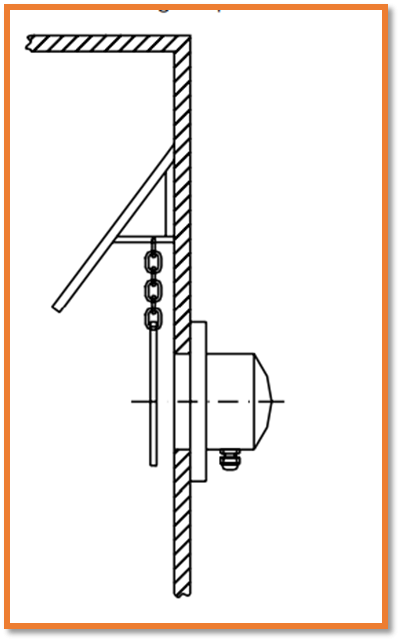
For very coarse-grained, sharp-edged, or high-density bulk materials, the use of a protective guard is strongly recommended. A guard mounted over the level monitor shields the sensor and membrane from direct impact by dropping material. In addition, a flexible protective curtain made of rubber or plastic can be used to reduce membrane wear by resting against it as the bulk material level rises. Proper installation away from the material inflow path is critical, as direct exposure can lead to rapid failure of the monitor and membrane.
Does a membrane level monitor require maintenance?
Membrane level monitor is designed for maintenance-free operation under normal working conditions. As they use a simple mechanical switching principle with no complex electronics, routine servicing is generally not required. However, periodic visual inspection during regular plant maintenance is recommended to ensure the membrane is free from damage, excessive wear, or material build-up, especially in demanding or abrasive applications.
Does the membrane level monitor require electrical power to detect level?
No. The switching action itself does not require any power, as it is mechanically actuated. This makes membrane level monitors especially reliable in applications where electrical supply is limited or where simple, fail-safe level detection is preferred.
What Are the Features of a Membrane Level Monitor?
- Handles a Wide Range of Dry Bulk Goods: Membrane level monitors are suitable for detecting the level of various dry bulk materials, including powders, granules, pellets, and coarse solids. The flexible membrane responds reliably to material pressure, making the device effective across different bulk densities and particle sizes.
- Mechanically Actuated Switch: Level detection is based on a purely mechanical switching principle. When bulk material presses against the membrane, it moves inward and activates an internal switch. Once the material level drops, the membrane returns to its original position, allowing continuous and repeatable operation.
- Requires No Power to Operate: The switching mechanism does not require electrical power to detect material presence. This makes membrane level monitors highly reliable, particularly in applications where power availability is limited or where a simple, fail-safe level detection solution is preferred.
- Economical: Membrane level monitors provide a cost-effective level detection solution due to their simple design, low installation complexity, and minimal maintenance requirements. The absence of complex electronics helps reduce both initial investment and long-term operating costs.
To learn more about membrane level monitors, please get in touch with us
Can membrane level monitors operate in harsh environments?
Yes. They are designed to withstand dusty conditions, temperature variations, and mechanical stress, provided the correct membrane material and housing type are selected for the application.
What different models are available for membrane level monitors?
Membrane level monitors are available in different models to suit varied operating conditions and application needs. The most commonly used models include options for standard applications and higher-temperature environments.
1. One model is designed with a double-membrane construction, which provides enhanced durability and reliability. This type is suitable for general dry bulk material handling and offers good protection against mechanical stress. It is available with membranes made from flexible elastomer materials, along with robust retaining ring options. This model supports flexible installation positions and is designed for normal industrial temperature ranges and low-pressure conditions.
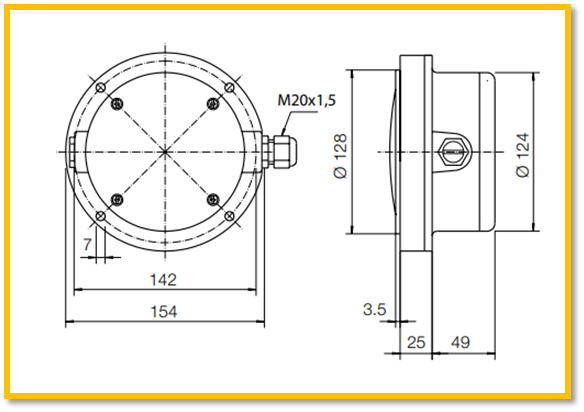
2. Another model is specifically intended for applications involving higher process temperatures. It is available with different membrane material options, including elastomers and metal membranes, allowing it to operate reliably across a wider temperature range. Depending on installation orientation, different enclosure protection levels are provided. Like the standard model, it supports flexible mounting positions and is suitable for low pressure bulk material environments.
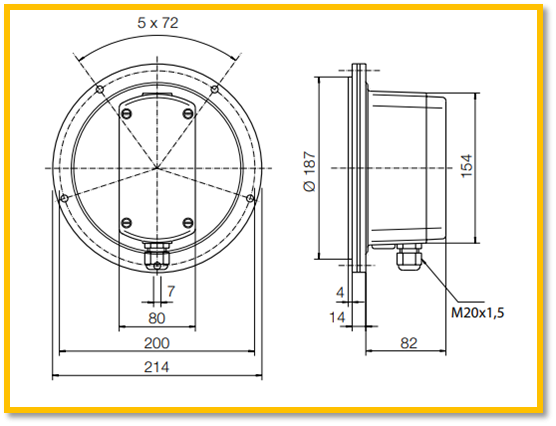
By offering multiple models with different membrane materials and temperature capabilities, membrane level monitors can be selected to match process requirements, environmental conditions, and material characteristics, ensuring reliable level detection across a wide range of industrial applications.
To learn more and get personalized guidance on selecting the right model for your application, get in touch with our industry experts today
What are the advantages of Using a Membrane Level Monitor?
- Simple and Robust Design: Membrane level monitors use a straightforward mechanical design a membrane, spring, plunger, and microswitch. Fewer components mean less can go wrong, making the device durable and reliable even in industrial settings where complex sensors might fail. This design is ideal for harsh conditions like silos, bins, or hoppers, ensuring long-term operation.
- Reliable Operation in Dusty Environments: Unlike optical or electronic sensors that can be affected by dust, the membrane monitors physically senses material pressure. Dust, powder, or fine granules do not interfere with its operation, ensuring consistent and dependable readings, making it perfect for industries handling grains, powders, cement, or chemical granulates.
- No Need for Calibration Electronics: The device works mechanically, using a spring-loaded membrane and plunger to activate a switch, so it doesn’t require electronic calibration. This saves time, reduces errors, and allows users to install and operate it immediately without technical setup, which is useful for facilities that need quick installation or frequently change materials.
- Minimal Maintenance Requirements: With no moving gears or complex electronics exposed to bulk materials, wear and tear are minimal. Protective membranes and optional guards prevent damage from heavy or sharp materials, reducing downtime and maintenance costs. This makes the monitor highly suitable for continuous operation in industrial plants where stopping production for maintenance is expensive.
- Cost-Effective Solution for Bulk Material Level Detection: The combination of simple mechanical design, durability, and low maintenance makes it an affordable option compared to high-tech level sensors. It provides reliable level monitoring without large upfront investment or ongoing costs, ideal for industries with many silos or bins where deploying multiple sensors can otherwise become expensive
Is the sensitivity adjustable in Membrane Level Monitor?
Yes. The sensitivity can be adjusted using an internal spring mechanism, allowing the device to be tuned according to material weight, density, and installation conditions. This helps ensure accurate switching for different bulk materials. To learn more about membrane level, contact us.
Other Members of the KOBOLD group