Čeština
  Deutsch
  Español
  Français
  Italiano
  Magyar
  Nederlands
  Polski
  Português
  Slovenčina
  Türkçe
  Русский
  中文
中文  한국의
한국의 KOBOLD Instruments Inc • 1801 Parkway View Drive • 15205 Pittsburgh, PA • Tel: +1 412 788 2830 • E-mail: Please activate JavaScript • visit koboldusa.com

 Float Level Switch

Frequently Asked Questions Float Level Switch
What is a float level switch?
A float level switch is a device used to detect and monitor the level of liquids in tanks, vessels, or containers. It provides point-based level detection, meaning it signals when the liquid reaches a specific height, enabling reliable control of processes such as filling, emptying, or overflow prevention.
Float level switches operate on a simple principle: a buoyant float moves with the liquid level and actuates a switch (mechanical or magnetic) to open or close an electrical circuit. This signal can be used to control pumps, alarms, or other equipment automatically.
Common types of float level switches include:
- Reed float switches: These switches use a magnetic float to actuate a reed switch. They are commonly configured as normally open (NO) or normally closed (NC).
- Mechanical float switches: These switches use a lever or mechanical contact to trigger an electrical signal.
The switching principle is generally independent of the electrical properties of the liquid (such as conductivity or dielectric constant). However, parameters such as maximum pressure and temperature, ingress protection (IP rating), and minimum liquid density depend on the specific model and must be verified for each application.
Float level switches are widely used across industries such as water treatment, chemical processing, and manufacturing, offering a reliable and simple solution for liquid level monitoring.
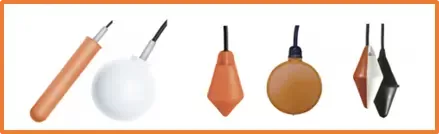
What are the different types of float level switches and how do we choose the right one?
Float level switches are available in different types, each designed for specific applications and installation requirements.
The main types include:
- Single-point float level switches: It is Used to detect a single liquid level (high or low) in a tank or vessel. These are ideal for basic control functions such as pump automation, overflow prevention, or dry-run protection.
- Multi-point float level switches: It is Designed to detect multiple level points within the same tank using several switching positions along a stem. They are suitable for applications requiring multiple signals, such as staged control or alarm systems.
- Cable (tethered) float switches: Commonly used in open tanks, sumps, or wastewater applications, these switches float freely and activate based on tilt angle. They are well suited for rugged environments and bulk liquid handling.
How to choose the right float level switch:
Selecting the appropriate float level switch depends on several key factors:
- Mounting and installation: Choose between top-mounted, side-mounted, or cable-type designs based on tank configuration.
- Liquid properties: Ensure material compatibility and consider factors like corrosion, viscosity, deposits, or solids that may affect float movement.
- Minimum liquid density: Adequate buoyancy is required for proper operation and varies by model.
- Electrical output: Select the correct switching type (e.g., reed contact or mechanical switch) and verify load capacity.
- Operating conditions: Check pressure, temperature, and environmental protection (IP rating).
- Certifications: For hazardous areas, ensure the selected model meets the required approvals.
What are the common applications of float level switches?
Float level switches are widely used to monitor and control liquid levels in both open and closed tanks across various industrial and commercial applications. As point-level devices, they provide reliable switching at predefined liquid levels.
Common applications include:
- Minimum and maximum level monitoring: Ensuring liquids do not fall below or exceed critical levels to protect equipment and maintain process stability.
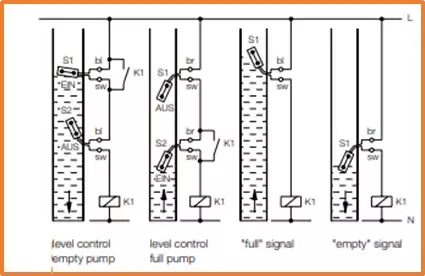
- Pump control (start/stop): Commonly used in two-point control systems, where one switch activates the pump (low level) and another stops it (high level), preventing dry running or overflow.
- Overflow and dry-run protection: Triggering alarms or shutting down systems when unsafe conditions occur.
- Alarm systems: Providing high- or low-level alerts in storage tanks, sumps, or process vessels.
- Multi-point level detection: Using multiple switches in a single tank to manage staged control or multiple process conditions.
- Applications in constrained installations: Suitable for side mounting or installations where space or tank design limits other measurement methods.
- Use in demanding environments: Depending on material and design, float switches can be applied in water treatment, chemical processing, wastewater systems, and other environments involving aggressive, contaminated, or viscous liquids .
Float level switches are primarily limit devices, offering a simple, reliable, and cost-effective solution for liquid level monitoring and control when continuous measurement is not required.
How does a float level switch operate?
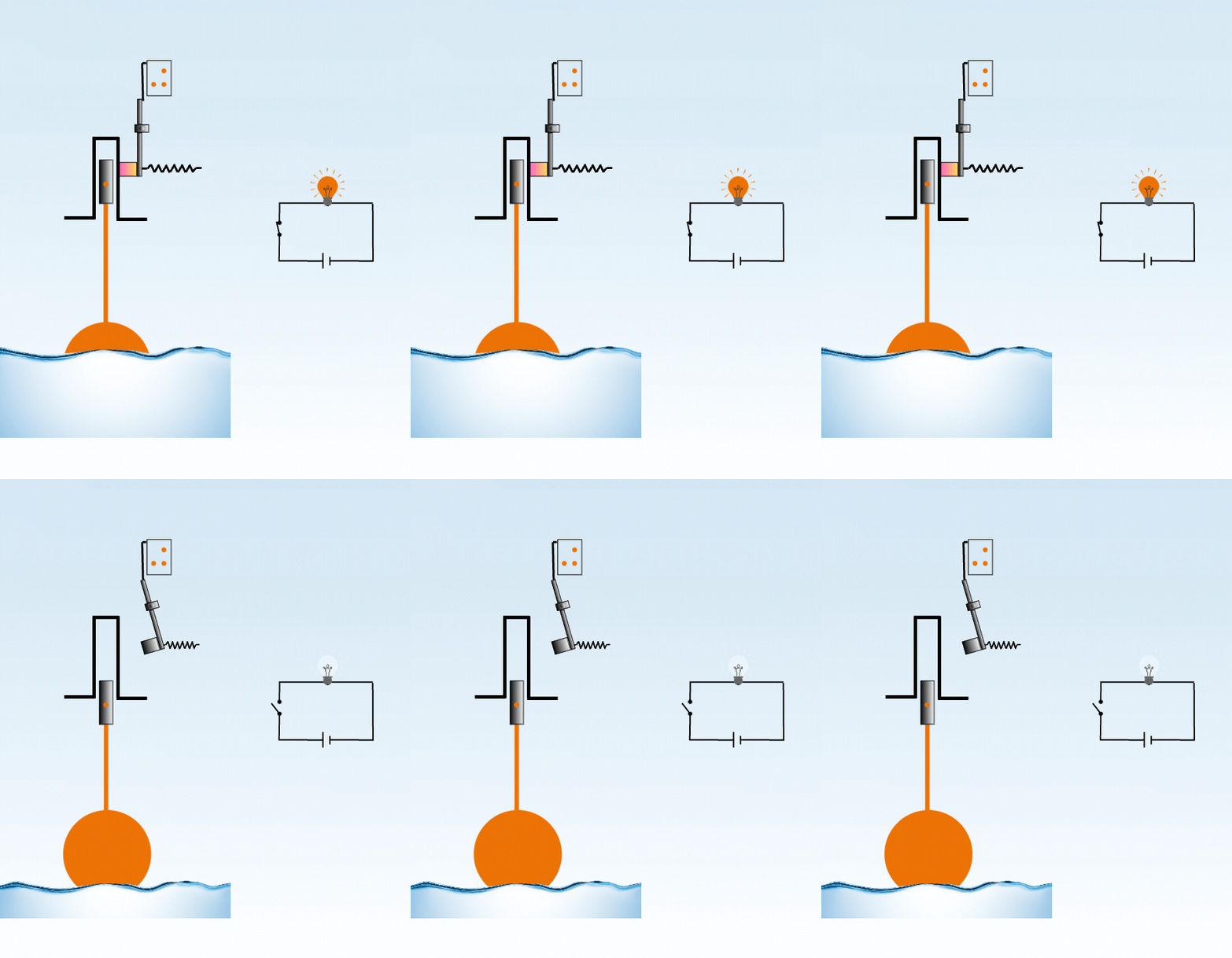
A Float level switch operates based on the movement and position of a buoyant float in response to changing liquid levels. As the liquid rises or falls, the float moves accordingly, triggering an internal switching mechanism.
Depending on the design, the operating principle typically involves:
- A float (ball or cylindrical type) that rises and falls with the liquid level
- An integrated microswitch or reed contact, usually provided as a changeover contact (SPDT), which can be configured as normally open (N/O) or normally closed (N/C)
- A switching action that occurs when the float reaches or deviates from a defined horizontal position
In advanced designs such as KOBOLD NGS, the float magnet repels an opposing magnet and creates a snap‑action effect that actuates a microswitch via a plunger even small level changes can be detected.
The switching point can be adjusted depending on the installation method:
- By positioning the switch at a desired height (side mounting)
- By cable clamping to set the required level
- By using ballast weights in top-mounted installations to stabilize the switching position
This simple yet effective mechanism makes float level switches suitable for accurate level detection and control across a wide range of industrial applications.
For the right selection and technical support, consult our engineer.
What is the functionality of a float level switch?
The primary functionality of a float level switch is to monitor and control liquid levels in tanks, vessels, or containers by providing discrete (on/off) switching signals at predefined levels
Float level switches can:
- Detect minimum and maximum liquid levels to maintain safe and efficient operation.
- Trigger alarms or control equipment such as pumps, valves, or indicators automatically.
- Support single-point or multi-point level detection, using one or multiple switching points depending on the design.
- Enable automated control systems, such as pump start/stop for overflow prevention or dry-run protection .
Float level switches operate based on the movement of a buoyant float, which actuates a mechanical or magnetic switch as the liquid level changes.
They are designed to operate within specified limits, including pressure, temperature, ingress protection (IP rating), minimum liquid density, and material compatibility, which must be verified for each application.
What types of media can float level switches monitor?
Float level switches can be used to monitor a wide range of liquids across industrial and commercial applications.
Typical media include:
- Water and wastewater
- Oils and industrial fluids
- Corrosive or chemically aggressive liquids (such as acids, alkalis, and solvents)
- Hot or high-temperature liquids
- Soiled, viscous, or contaminated media
The suitability of a float level switch depends on proper selection based on application conditions. Key considerations include:
- Material compatibility: Wetted parts must be compatible with the liquid (e.g., polypropylene, PTFE, or stainless steel).
- Minimum liquid density: The liquid must provide sufficient buoyancy for the float to operate correctly.
- Presence of solids or deposits: Heavy contamination, scaling, or sticky media may restrict float movement and affect performance.
- Operating conditions: Temperature, pressure, and environmental factors must be within the specified limits of the selected model.
Float level switches offer a reliable solution for liquid level monitoring when the medium and operating conditions are carefully matched to the device design.
How are float level switches wired (NO/NC/SPDT) and how do I protect contacts?
Float level switches typically use a changeover contact (SPDT – Single Pole Double Throw), which allows flexible wiring as either.
- Normally Open (NO): The circuit closes when the float reaches the set level
- Normally Closed (NC): The circuit opens when the float reaches the set level
This enables the switch to be configured based on whether activation is required on rising or falling liquid levels.
What are the benefits of using float level switches?
Float level switches provide a simple, reliable, and cost-effective solution for point-level detection in a wide range of liquid monitoring applications.
Key benefits include:
- Simple design: Operates on a straightforward mechanical or magnetic principle without the need for complex electronics.
- Reliable operation: Based on proven technology, offering dependable performance when properly selected for the application.
- Cost-effective solution: Generally, more economical than many other levels sensing technologies, making them suitable for both basic and industrial use.
- Easy installation and integration: Can be easily integrated into control systems for alarms, pump control, or automated processes.
- Flexible configurations: Available in single-point or multi-point designs to detect different liquid levels within the same system.
- Wide application range: Suitable for various liquids and operating conditions, depending on material selection and design.
Are float level switches suitable for use in hazardous areas?
Float level switches can be used in hazardous areas, but suitability depends on the specific model and its certifications.
Certain designs are available with approvals for use in environments where flammable gases, vapours, or dust may be present. These devices are engineered to prevent ignition risks by limiting sparks, heat generation, or electrical faults.
When selecting a float level switch for hazardous areas, it is important to:
- Verify the required certification (e.g., ATEX, IECEx) for the specific application and zone classification
- Check the marking and documentation to ensure compliance with safety standards
- Follow installation guidelines, including proper grounding, cable protection, and, where required, use of suitable fusing or protection devices
- Ensure electrical parameters (voltage, current, switching capacity) are within approved limits.
In summary, float level switches are suitable for hazardous areas only when the selected model is specifically certified for such use and installed according to the applicable safety requirements. To find the right switch for your specific application, please contact our experts or visit us.
What are the pressure and temperature limits of float level switches?
Float level switches are designed to operate under a range of pressure and temperature conditions, depending on the specific model and application requirements.
Typically, these switches can handle:
- Pressure ranges from as low as 1 bar up to 25 bar
- Temperature ranges from approximately 85°C to 250°C
Different configurations are available to suit varying process environments, for example:
- Lower pressure models for light-duty applications
- High-temperature models for demanding industrial conditions
- High-pressure variants for pressurized systems
Since operating limits depend on the design, materials, and construction of each unit, it is important to select the appropriate model based on your specific application parameteters.
Note: Specifications such as maximum pressure (Pmax) and maximum temperature (Tmax) vary from model to model. For precise selection and technical details, it is recommended to consult with an expert or refer to the product documentation.
What materials are used in float level switches?
Float level switches are manufactured using a range of materials to ensure compatibility with different liquids, operating conditions, and industrial environments.
Commonly used materials include:
- Plastics (e.g., polypropylene, polyamide): Used for general-purpose applications due to good chemical resistance and lightweight construction.
- Fluoropolymers (e.g., PTFE): Suitable for highly corrosive or chemically aggressive liquids and demanding environments.
- Elastomer-coated materials: Applied in certain designs to improve resistance against aggressive media and extend durability.
- Stainless steel: Preferred for applications involving high pressure, high temperature, or where mechanical strength and durability are required.
The selection of material depends on factors such as chemical compatibility, temperature, pressure, and environmental conditions. It is important to consider all wetted parts of the device such as the float, stem, seals, and cable materials to ensure long-term reliability. The selected material must be suitable for the specific liquid composition, concentration, and operating conditions.
For accurate selection and detailed specifications, it is recommended to consult with an expert or refer to the product documentation.
Where are float level switches commonly used?
Float level switches are widely used across industries where liquid level monitoring and control are critical for safe and efficient operations. Their simple design and reliability make them suitable for a variety of process environments.
Common applications include:
- Power Plants: It is Used to monitor and control water, oil, and chemical levels in boilers, storage tanks, and pumping systems, ensuring safe operation and preventing overflow or dry running.
- Petrochemical and Refinery Plants: It is Installed in storage tanks and pressure vessels to manage liquid levels, helping prevent overfilling, leakage, and process interruptions.
- Chemical Processing Industries: Applied in reactors and storage tanks to maintain precise levels of chemicals, supporting consistent processing and safety compliance.
- Paper and Pulp Industry: Utilized in tanks, sumps, and process lines during pulp washing and paper production, ensuring smooth material flow and level control.
- Sugar Industry: It Helps to regulate water, juice, and syrup levels during various stages of the refining and production process .
Float level switches are also suitable for applications involving aggressive media, high temperatures, or varying pressure conditions, depending on the selected model and material compatibility. For application-specific guidance, consult our engineer.
How is a float level switch installed?
The installation of a float level switch involves correct positioning, secure mounting, and proper electrical connection to ensure reliable operation.
Key installation guidelines include:
- Ensure free float movement: The float must move freely with the liquid level. Avoid installation near walls, pipes, or obstructions that may restrict movement.
- Set the switching point correctly: The switching level can be adjusted using cable clamping, mounting height, or weights, depending on the switch design.
- Avoid cable damage and stress: Do not sharply bend, stretch, or compress the cable. Maintain the recommended bending radius and use proper strain relief where required.
- Protect cable ends and connections: Cable joints and terminations should be installed in a dry, protected enclosure to prevent moisture ingress. Cable ends should not be exposed to liquid unless specifically designed for it.
- Ensure proper environmental protection: Use suitable junction boxes or enclosures with appropriate ingress protection (IP rating) based on the installation environment.
Common installation considerations:
- Avoid installing the switch too close to walls or equipment
- Ensure the cable is securely fixed to prevent tangling
- Follow manufacturer guidelines for cable length and operating conditions
Proper installation is essential to prevent issues such as false triggering, pump dry running, or overflow conditions.
For expert assistance and correct installation support, consult our engineer.
Do float level switches require calibration?
In most applications, float level switches do not require calibration like analog level transmitters. They are mechanical devices, and the switching point is set by installation parameters such as mounting position, cable length, or use of weights.
Instead of calibration, proper commissioning is important:
- The switching point is adjusted during installation.
- A functional test should be performed by simulating changes in liquid level.
- Verify correct switching behavior (NO/NC) and response at the desired levels.
Float level switches are designed for simple setup and reliable operation without the need for routine calibration.
Does a float level switch require maintenance?
Float level switches are generally designed to be low-maintenance or maintenance-free, making them suitable for continuous operation across a wide range of industrial applications.
In most cases, no regular servicing is required. However, to ensure reliable performance over time, the following checks are recommended:
- Periodic inspection of cables and connections to identify any signs of wear or damage
- Cleaning of the float and sensing components if there is buildup from process media or contamination
- Immediate replacement of damaged components, especially cables, to avoid operational failure or safety risks
For standard applications, maintenance is minimal. However, in environments involving aggressive media, high temperatures, or heavy deposits, occasional cleaning and inspection may be necessary. Maintenance requirements may vary depending on the model, installation conditions, and application environment.
For model-specific guidance and expert support, consult our engineer to ensure proper selection and long-term performance.
Other Members of the KOBOLD group